Regulation · BIM
Serbia's BIM mandate starts 1 January 2028 — here's what it actually means
Published 2026-04-08 · By the 3DExperts team
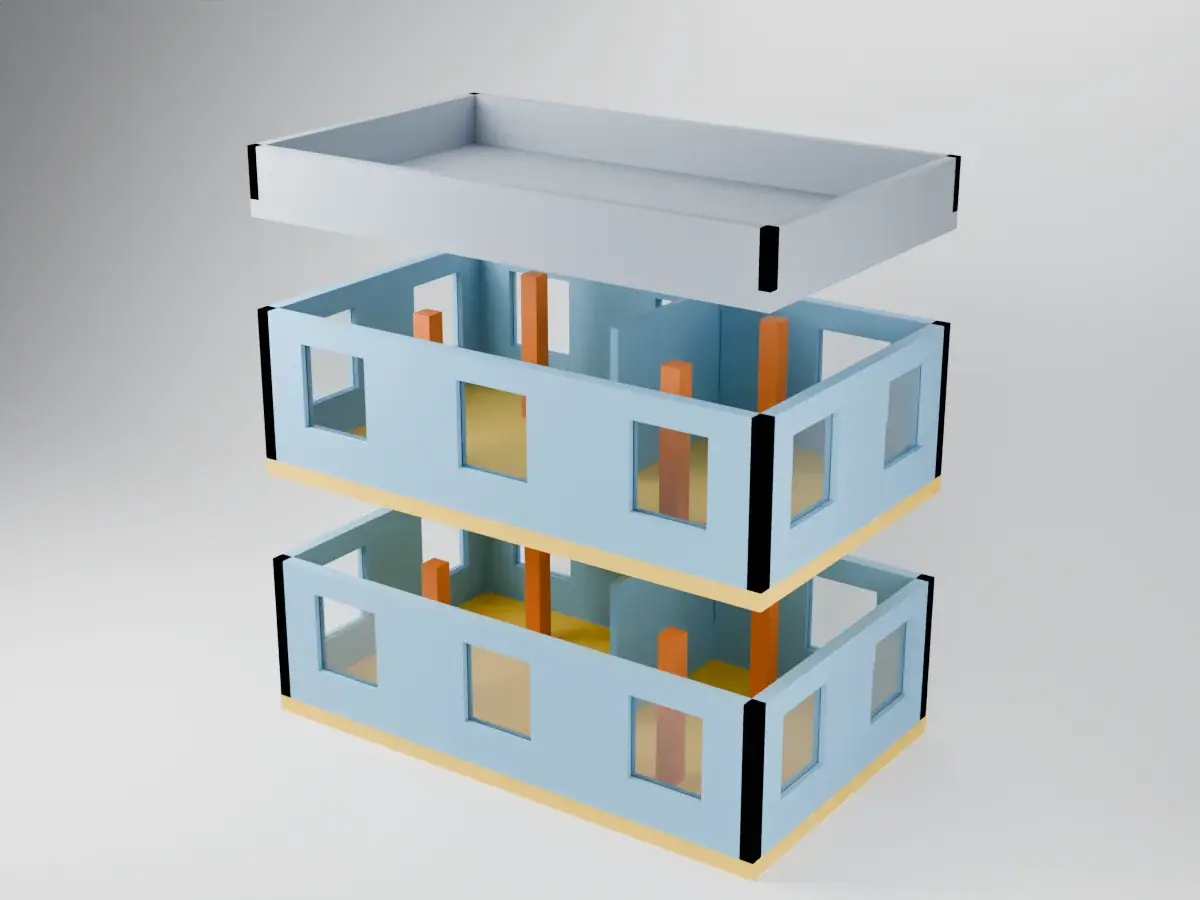
Serbia has committed to a BIM-mandatory regime starting 1 January 2028. From that date, all projects in Serbia must be designed using BIM technology — announced by Minister Goran Vesić and grounded in amendments to the Law on Planning and Construction. The delayed timeline was set specifically to give design firms time to train staff and acquire software. That window is closing.
This post unpacks what the mandate actually requires, where the real bottlenecks will be, and the preparation steps that cost little today but save a lot in 2028.
What the mandate covers
The scope is broad: all projects must be produced using BIM technology. There is no minimum size threshold in the official announcement — the obligation applies across project types through design and permit phases. Implementation is driven by amendments to the Law on Planning and Construction and alignment with the EU directive on public procurement, which already mandates BIM for public sector projects.
What it does not do: it does not prescribe a specific BIM software, and it does not apply retroactively to projects already in the design phase before the cutover. Always verify the current regulatory text with the Ministry of Construction, Transport and Infrastructure for your specific project.
Who is affected
- Investors — residential, commercial, hospitality, industrial, and public buildings
- Architecture & engineering firms — both design leads and subconsultants (structure, MEP, facade)
- EPC contractors — who inherit the BIM model and are increasingly expected to use it on site
- Public institutions — procuring any building now needs BIM-literate tender evaluation, already required by EU directive
Three bottlenecks we expect
1. Trained people, not software. Revit licenses are easy to buy. Experienced BIM coordinators are not. The regional pool of people who have actually led a 20,000 m² BIM project through permit and construction is small — and it will not triple in 22 months.
2. As-built accuracy on brownfield sites. Many large projects in Serbia involve refurbishing or extending existing buildings. Drawings are almost always wrong. Scan-to-BIM becomes mandatory as an input — not a nice-to-have — because you can't build a coordinated new-build model on top of guessed walls.
3. BIM Execution Plans (BEP). Without a proper BEP defining LOD per discipline, naming conventions, coordinate systems, and exchange formats, every party on the project invents their own approach. Clashes multiply. Delivery dates slip. The mandate will force BEPs into the mainstream — firms that already have BEP templates will have a meaningful advantage.
What to do in the next 12 months
- Pilot a BIM project now, on a smaller project. Real-project learning is worth ten training courses.
- Build a BEP template — LOD matrix, naming, file exchange, coordinate system, clash rules. Refine it on every project.
- Lock in a Scan-to-BIM partner for brownfield projects. Capacity will be the limiting factor in 2027–2028.
- Train at least two internal BIM coordinators. Certification helps, but project experience matters more.
- Adopt IFC as your exchange format. Not a proprietary file. This is what buildingSMART pushes and what the mandate will increasingly favor.
How 3DExperts can help
We are Adriatic-based — Montenegro-registered, working across CG, RS, BA, HR, and the broader EU — and we focus on three services directly relevant to the 2028 mandate:
- Scan-to-BIM — terrestrial LiDAR, handheld scanning and photogrammetry with equipment booked per project. Revit + IFC delivery, 30-day support.
- BEP and LOD consulting — we help firms write their first BEP and set up LOD matrices per discipline.
- BIM coordinator training — practical, project-based training for in-house teams.
If you are planning a large project in Serbia that will hit the 2028 cutover, or you want to pilot a BEP template on a smaller project first, get in touch. A 30-minute scoping call costs nothing and usually clarifies the next three moves.
Source: Ministry of Construction, Transport and Infrastructure of Serbia — official announcement. Always verify the current legal text before committing to a project path.