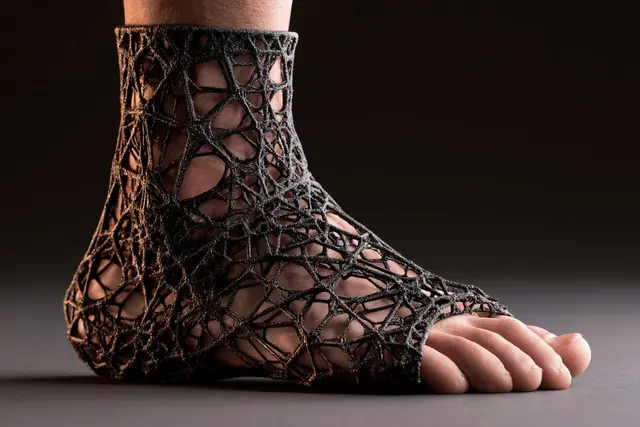
Lattice cushioning by zone
TPU lattices tune softness and rebound across the footbed — impossible to achieve with a single moulded foam.
Lattice midsoles, custom insoles and lasts in flexible TPU and durable nylon.
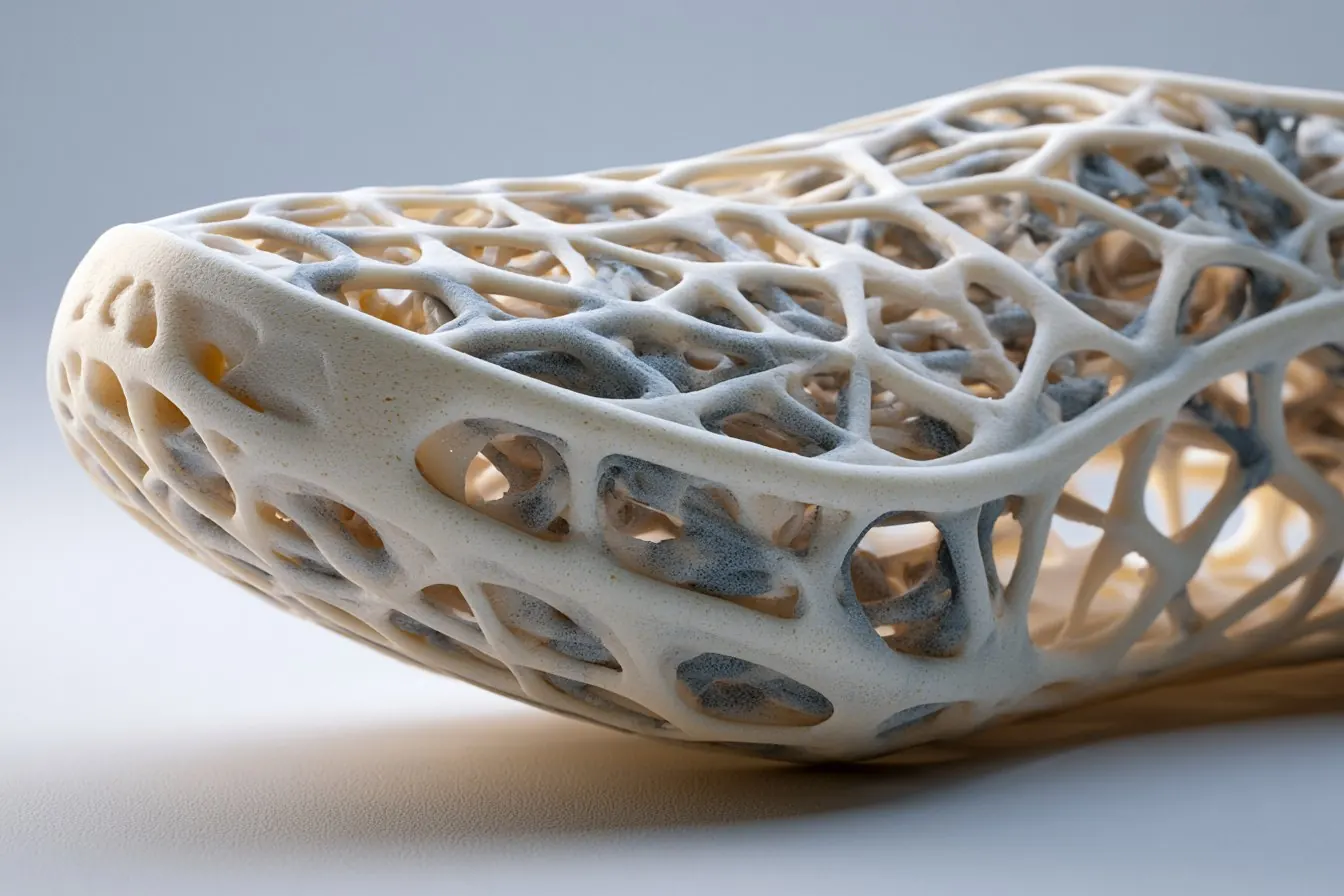
Footwear is where flexible 3D printing shines: TPU lattices give a midsole or insole tuned cushioning zone by zone, printed to an individual foot scan with no mould. Durable nylon covers lasts, moulds and structural elements, so a prototype, a custom orthotic footbed and a small production series all run on the same workflow.
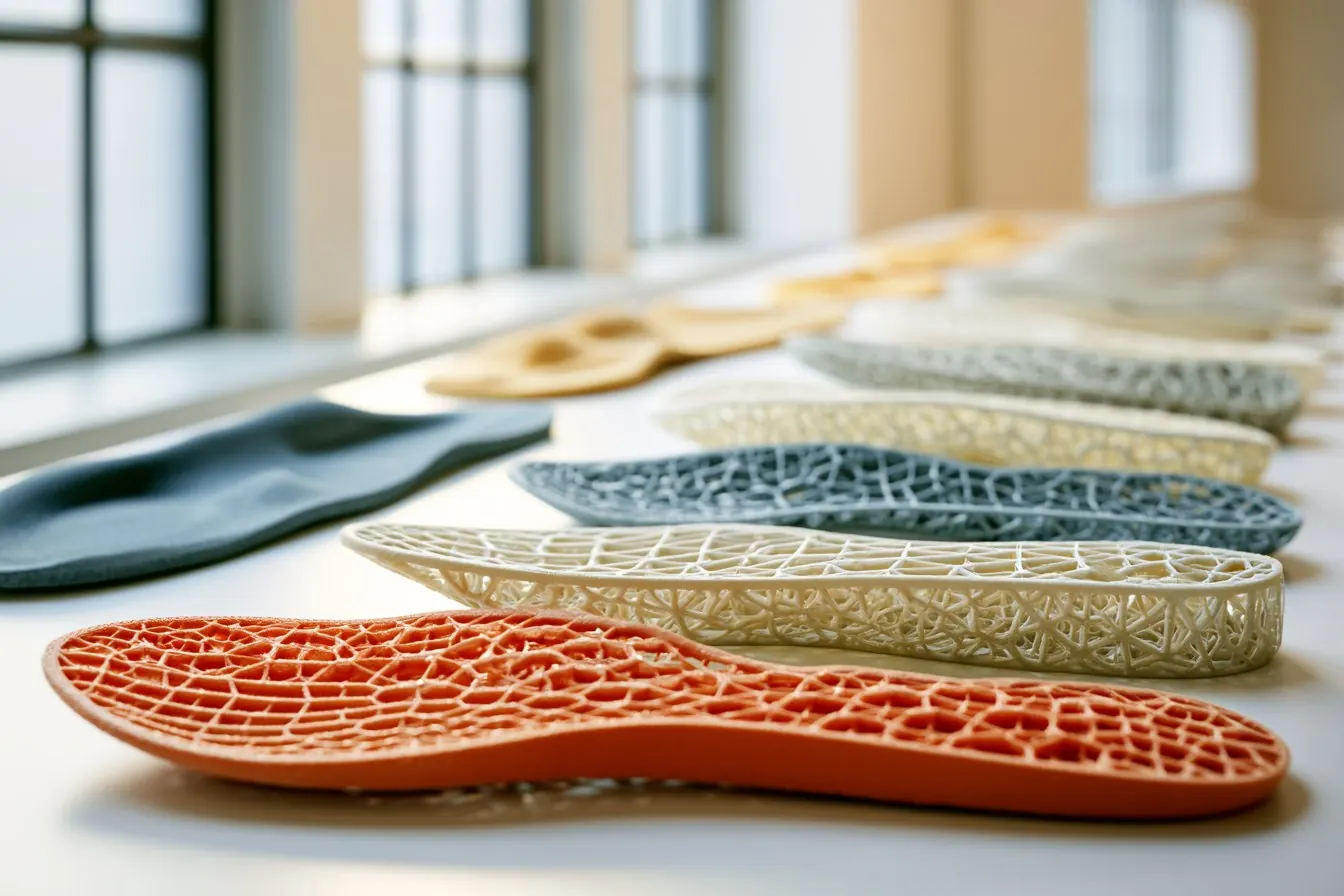
TPU lattices tune softness and rebound across the footbed — impossible to achieve with a single moulded foam.
Print insoles and footbeds to an individual scan at the same per-part cost.
TPU for cushioning and uppers, nylon for lasts, moulds and rigid structure — one supplier.
Validate a design and produce a limited run without committing to tooling.
Processes we useFlexible & PP — SLS →Nylon — MJF / SLS →Resin — LCD →
Flexible, energy-returning elastomer for lattice midsoles and cushioning insoles.
Same TPU chemistry in grey for visible or coloured cushioning parts.
Tough, flexible bio-based nylon for durable uppers and structural elements.
Rigid nylon for lasts, moulds and fit fixtures.
Typical starting points for the processes used in Footwear — not contractual limits. Confirm critical tolerances with us before production.
| Min wall thickness | 1.0 mm |
|---|---|
| Typical tolerance | ±0.3 mm |
| Layer height | 100–120 µm |
| Max build size | up to 380 × 380 × 284 mm |
| Supports | None — self-supporting powder bed |
| As-built surface | Matte; flexible in thin walls |
| Min wall thickness | 0.7 mm (SLS) / 0.5 mm (MJF) |
|---|---|
| Typical tolerance | ±0.3 mm (or ±0.3%) |
| Layer height | 80–120 µm |
| Max build size | up to 360 × 560 × 660 mm |
| Supports | None — parts are self-supporting in the powder bed |
| As-built surface | Uniform matte; dyeable (black and colours) |
| Min wall thickness | 0.4 mm (fine features from 0.2 mm) |
|---|---|
| Typical tolerance | ±0.1–0.2 mm |
| Layer height | 35–100 µm |
| Max build size | up to 200 × 125 × 210 mm |
| Supports | Required; removed and UV post-cured |
| As-built surface | High detail; smooth finish |
Finishes commonly specified for Footwear. Availability depends on the material; the exact price is shown in your instant quote.
Colour insoles, midsoles and uppers to any shade.
See finishing details →Smooths TPU lattice surfaces for comfort.
See finishing details →Even matte finish on nylon structural parts.
See finishing details →Yes — TPU lattices are tuned zone by zone for softness and rebound, something a single moulded foam cannot do. Share the intended use and we will advise on lattice type.
Yes — send the STL from your foot-scanning workflow and we print the footbed to that geometry at the same per-part cost.
Flexible TPU for midsoles, insoles and uppers; durable PA11 nylon for structural parts; and rigid PA12 for lasts and moulds.
Yes — from a single prototype to a limited run, with no tooling. Long-term wear and safety testing of the finished shoe remain with you.
Upload your STL and get an instant, itemised price — no account required.
Upload your STL